The idea
Plenty of people have furniture and home objects they no longer use; plenty of others are looking for more affordable, original or sustainable ways to furnish their space. The problem isn’t supply or demand: it’s that the experience is chaotic. Messy channels, unclear listings, and conversations that go nowhere.
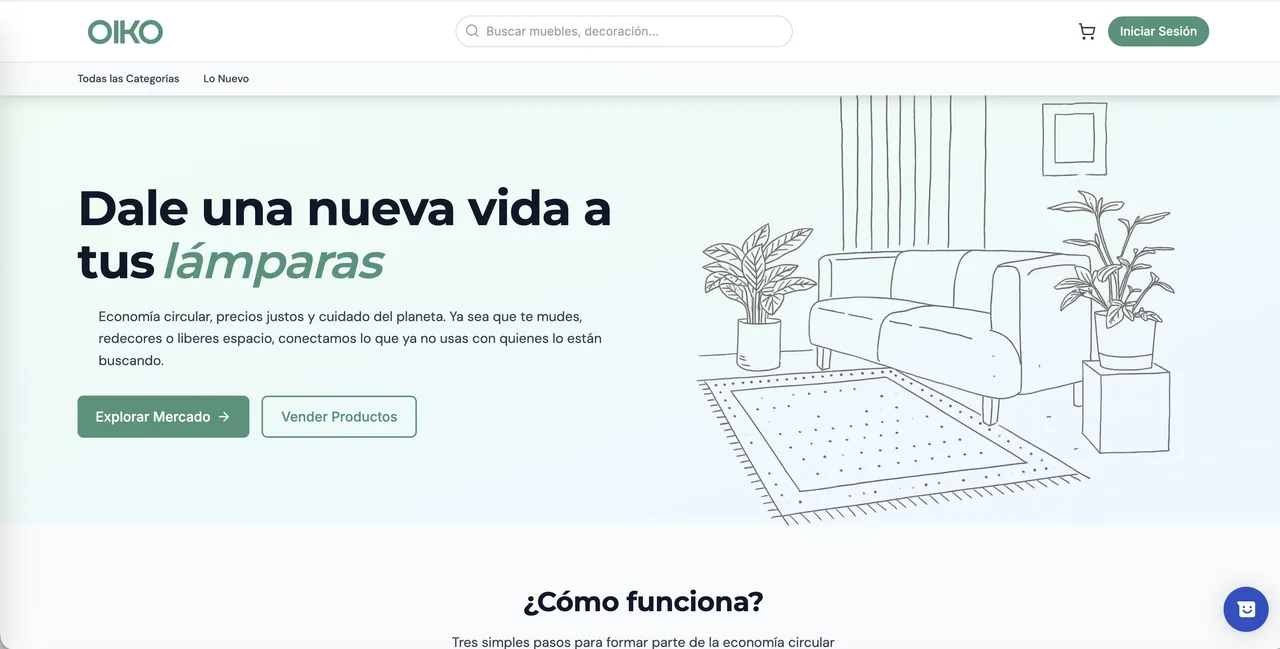
Oiko (oiko.uy) is a peer-to-peer marketplace for secondhand furniture in Uruguay that sets out to fix that: the simplest, most trustworthy way to buy and sell used home pieces. Its promise isn’t just “cheaper stuff”; it’s a more conscious, more human way to circulate objects that still have a story to tell.
The pitch
The clearest way to show what Oiko is about is the deck I built to explain it. It’s interactive: use the arrows (or click) to move through the slides.
What makes it different
Most secondhand selling happens in classified feeds and chat apps. Oiko brings the whole journey into one calm, well-designed place:
- Products that look their best. Multi-image galleries with drag-and-drop ordering, categories, room “spaces”, and honest condition labels.
- Negotiation, inside the platform. The heart of the product is a bidirectional offer system: offers can be accepted, rejected or countered, all with a clear status trail, instead of a hundred DMs.
- Trust in payment and delivery. A cart with multi-seller orders, a buyer-protection fee, transfer or MercadoPago, and real-time notifications so nothing gets lost.
- A conscious brand. Modern, close, and aligned with reuse: furnishing your home in a smarter, more sustainable way.
What I built
A React 18 + TypeScript + Vite front end with Tailwind, Framer Motion and a service layer over Supabase (Postgres, Auth and Storage, with row-level security on every table and triggers driving the notifications). Spanish-only, mobile-first, and green from head to toe. The offer-and-negotiation flow was by far the most demanding piece: a real state machine, not just a “buy now” button.
Where it stands
Oiko is on stand-by. I built it as a serious attempt, and it’s one of the projects I’d genuinely consider picking back up: the problem is real, the market is there, and the product already works. Sometimes the right move is to pause, keep the backups safe, and wait for the right moment.
What I learned
That in a marketplace, trust is the product. The listings and the search matter, but what actually unblocks a sale between two strangers is a flow that makes both sides feel safe: clear offers, protected payment, and a brand that feels like it is on your side.